


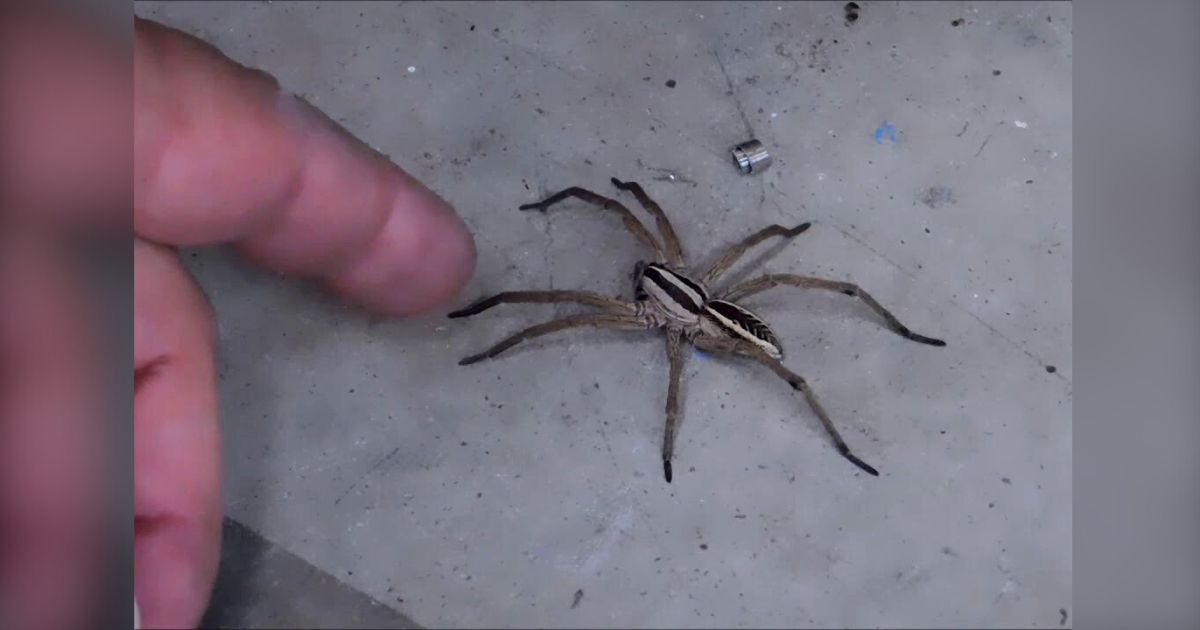
In Texas, wolf spider season brings an abundance of these fascinating arachnids into view.
During this time, a presenter encounters a particularly large wolf spider that has emerged from beneath a machine.
This encounter provides an opportunity to address common misconceptions about these misunderstood creatures and to showcase their behavior and characteristics

The presenter decides to engage with the wolf spider directly, opting to touch it to observe its reactions.
This decision is rooted in the desire to educate viewers about the true nature of wolf spiders.
Despite their fearsome reputation, these spiders are often wrongly perceived as aggressive and prone to attack.
This video aims to set the record straight by demonstrating their actual behavior when confronted by humans.

As the presenter approaches the spider, it adopts a defensive posture, raising one of its legs.
This stance is a clear indication that the spider is wary and prepared to defend itself if necessary.
However, contrary to the aggressive behavior often attributed to them, the spider does not launch an attack.
Instead, it remains in its defensive position, highlighting its preference to avoid confrontation.

The presenter uses this moment to emphasize that wolf spiders are more inclined to flee than to fight.
Their primary instinct is survival, which often means escaping potential threats rather than engaging with them.
This behavior is typical of many wild animals that prioritize avoiding danger over confrontation, and wolf spiders are no different.

The video also focuses on the physical characteristics of the wolf spider.
Its size and appearance are showcased, providing viewers with a close-up look at this impressive arachnid.
The wolf spider’s size can be intimidating, but this visual examination helps to demystify the creature and foster a better understanding of its role in the ecosystem.

At the conclusion of the interaction, the spider quickly disappears from sight.
This rapid exit is a testament to the wolf spider’s agility and strong survival instincts.
Its swift movement underscores its preference for avoiding prolonged exposure to potential threats.
This quick disappearance also serves as a reminder of how easily these spiders can blend into their surroundings and evade capture.

The presenter takes this opportunity to reinforce the message that wolf spiders are not the vicious creatures they are often portrayed to be.
Through direct interaction and observation, it becomes evident that these spiders prefer to keep to themselves and avoid unnecessary confrontations.
This revelation helps to dispel the myths surrounding wolf spiders and encourages a more informed perspective.

The encounter concludes on a positive note, with the spider moving away swiftly and disappearing from view.
This final act of evasion reinforces the idea that wolf spiders are more interested in escaping than in engaging with potential threats.
The presenter’s calm and informative approach helps to educate viewers and alleviate any lingering fears about these misunderstood creatures.

Ultimately, the video serves as an educational tool, shedding light on the true nature of wolf spiders during their peak season in Texas.
By observing their behavior up close and addressing common misconceptions, the presenter helps viewers develop a more accurate and respectful understanding of these remarkable arachnids.
As the spider vanishes from sight, it leaves behind a lesson in coexistence and a reminder of the importance of approaching nature with curiosity and respect.
See what happens when you mess with a Texan Wolf spider in the video below!
Please SHARE this with your friends and family.


